
MAAS News
News · 2026-09-21
Huazhi Future Releases Lingyan Miaoyu Special Chapter on Security AI Capabilities: Security Architecture, Agent Governance and Evaluation for Enterprise LLM Applications
Huazhi Future (Chongqing) Technology Co., Ltd. has released the Lingyan Miaoyu Special Chapter on Security AI Capabilities, a companion special chapter to the Lingyan Miaoyu Large Language Model Application White Paper. Focusing on security for enterprise large language model applications, the chapter systematically explains the relationships among data protection, model security, agent governance, computing-resource coordination, and evaluation and audit, and provides a unified framework for technical selection, solution design, project acceptance, and ongoing operations across six chapters and two appendices.
Key Facts at a Glance
- Five capability dimensions: data protection, model security, agent governance, computing and cross-domain collaboration, and evaluation and compliance.
- Four boundaries to define: data boundary, execution boundary, result boundary, and security assurance boundary.
- Three quantum technology paths distinguished: Post-Quantum Cryptography (PQC), Quantum Key Distribution (QKD), and Quantum Random Number Generation (QRNG) — plus quantum-assisted computing, assessed separately.
- Aligned with external references: NIST's finalized post-quantum standards (ML-KEM, ML-DSA, SLH-DSA) and OWASP guidance for agent security and prompt-injection prevention.
- Five industry scenarios: government, financial, healthcare, public safety, and industrial — each with defined control requirements and responsibility boundaries.
- Seven defined evaluation metrics: control coverage rate, risk blocking rate, false blocking rate, detection precision and recall, task-chain audit coverage, latency and recovery (RTO/RPO), and service success rate.
- Four-phase implementation roadmap: inventory and boundary definition, limited pilot, acceptance and launch, and operations and iteration.
- Honest capability boundaries: all appendix metric thresholds are explicitly marked as pending verification — not achieved performance, service commitments, or certification conclusions.
About This Special Chapter
- Document Title: Lingyan Miaoyu Special Chapter on Security AI Capabilities
- Publishing Entity: Huazhi Future (Chongqing) Technology Co., Ltd.
- Series: Special chapter of the Huazhi Future Lingyan Miaoyu Large Language Model Application White Paper
- Scope: Security architecture, agent governance, industry applications, and validation & evaluation
- Intended Readers: Government and enterprise managers, technical leads, security teams, and industry partners
Reading Guide and Executive Summary
Positioning of This Special Chapter
This special chapter focuses on the development of Lingyan Miaoyu's security capabilities for enterprise applications. It systematically explains the relationships among data protection, model security, agent governance, compute-resource coordination, and evaluation and audit, providing a unified framework for technical selection, solution design, project acceptance, and ongoing operations. It is intended for government and enterprise managers, technical leads, security teams, and industry partners.
Core Judgments
Security boundaries should cover the full lifecycle of an AI task. Beyond model outputs, retrieved data, tool permissions, execution identities, cross-domain transfers, and downstream use of results also require control. Security mechanisms should be implemented in identity, policy, and execution systems outside the model, rather than relying solely on prompt constraints.
Security development should begin with implementable and repeatable controls. Data classification, least privilege, approval of sensitive operations, and task auditing should establish the foundation, after which post-quantum cryptography and specific quantum communication technologies can be evaluated based on cryptographic migration needs. Quantum-assisted computing and cryptographic security should be assessed separately and should not be treated as substitutes for one another.
Scope and Capability Boundaries
This special chapter describes the security capability framework and engineering requirements. The specific scope of functionality is subject to product versions, project configuration, and acceptance records. Diagrams illustrate reference architectures or application scenarios and do not constitute evidence of deployed cases. No security mechanism can eliminate all risk, and model-assisted outputs still require review responsibilities aligned with business risk.
Metrics should be validated only after the samples, scenarios, environment, and statistical methods are clearly defined. The numerical values retained in the appendix are inputs for metric verification and should not be regarded as achieved product performance, service-level commitments, or certification conclusions. Industry compliance must be assessed separately in light of applicable requirements, actual data flows, and organizational controls.
Reading Path
| Reader | Recommended Focus |
|---|---|
| Management and Business Leaders | Chapter 1 Security Boundaries; Chapter 4 Industry Scenarios; Chapter 6 Implementation and Responsibilities |
| Technical and Security Teams | Chapter 2 Architecture; Chapter 3 Technical Controls; Chapter 5 Evaluation and Appendix Metrics |
| Project Acceptance and Audit Teams | Chapter 5 Testing Methodology; Chapter 6 Delivery Checklist; Appendix Validation Items |
Security Objectives and Boundaries
1.1 Risk Scope and Capabilities
After enterprises connect large language models(LLMs) to knowledge bases, business systems, and execution tools, security risks can propagate along the task chain. Malicious instructions in external documents may influence model planning, incorrect identity propagation may amplify tool permissions, and unreviewed generated outputs may enter subsequent business processes. Security design should address data, models, agents, computing resources, and organizational governance together.
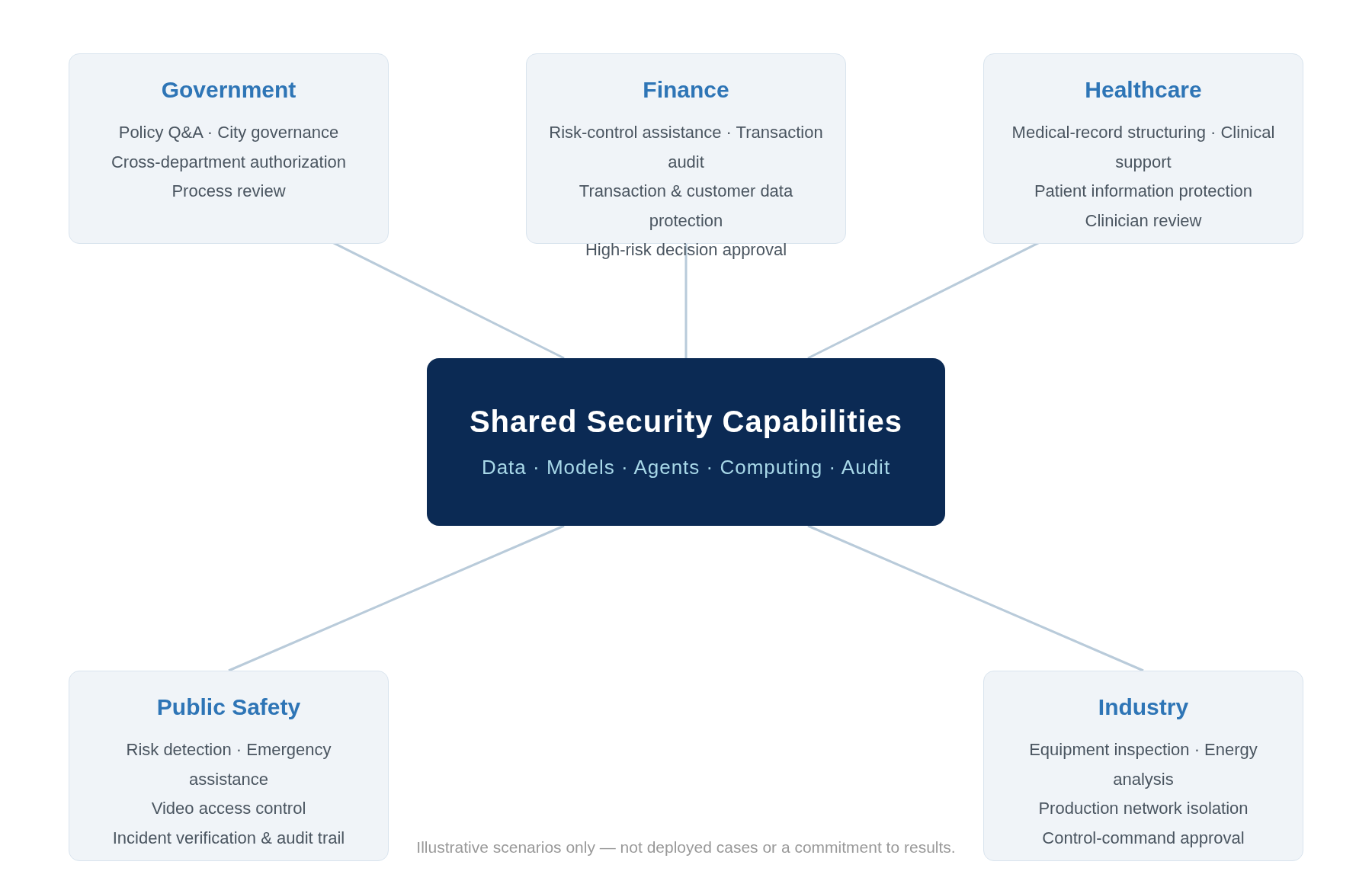
[Figure 1 Security AI Capability Mind Map]
This special chapter organizes its development requirements across five capability dimensions: data protection governs the collection and flow of information; model security governs models, retrieval, and outputs; agent governance constrains real-world actions; computing and cross-domain collaboration protect the runtime environment; and evaluation and compliance establish traceable evidence and accountability.
The security scope covers text, images, audio and video, and their derived information. Technical measures should be selected according to actual data types and business risks, rather than using a single “security model” as a substitute for system-level governance.
1.2 Security Objectives and Responsibility Boundaries
Security objectives should be translated into executable rules and verifiable evidence. Business teams define the tasks that may be performed, security teams establish control policies, the platform enforces constraints during invocation and execution, and auditors use records and tests to confirm whether the controls are effective.
| Security Objective | Control Focus | Validation Evidence |
|---|---|---|
| Controllable Data | Classification, authorized access, in-domain processing, egress review | Data-flow diagrams, authorization records, egress logs |
| Governable Models | Provenance and version management, retrieval permissions, output review | Model inventory, test sets, version and evaluation records |
| Constrained Execution | Least privilege, tool allowlists, approval for sensitive operations | Permission matrix, approval records, tool-call records |
| Traceable Collaboration | Cross-domain identity federation, authorization propagation, task correlation identifiers | Cross-domain call logs, integrity-validation records |
| Manageable Failures | Exception blocking, degraded fallback, backup and recovery | Exercise reports, recovery time, data-consistency checks |
Four Types of Boundaries to Define
Data boundary: Encryption does not automatically mean that “data remains within the domain.” Model inputs and outputs, vector indices, logs, caches, backups, and administrative and operational access must also be managed. Cross-domain collaboration should transmit only the information necessary to complete the task and for which authorization has been granted.
Execution boundary: A model may propose an action plan, but it should not grant itself permissions. Operations such as deletion, transactions, production control, and export of sensitive information must pass independent authorization checks and business approval.
Result boundary: Signatures, hashes, and audit mechanisms can help detect whether content has been modified, but they cannot prove that a model conclusion is correct. Results involving professional judgment, individual rights, or personal safety should be subject to human review.
Security Assurance Boundary: Cryptographic protection, system security, and industry compliance are different layers of concern. Research in quantum computing, a particular algorithm, or a single test result cannot be used to infer full-system security guarantees, long-term absolute security, or comprehensive compliance.
Overall Architecture and Full-Stack Collaboration
2.1 Layered Architecture and Cross-Cutting Governance
The Lingyan Miaoyu Security AI reference architecture uses layered controls and cross-cutting governance. Data security, model security, and agent security jointly support industry applications, while the computing runtime foundation provides isolation and recovery capabilities. Cross-domain collaboration and audit governance span all layers. Quantum security, as an extension path for the cryptographic system, should be validated progressively according to deployment conditions.
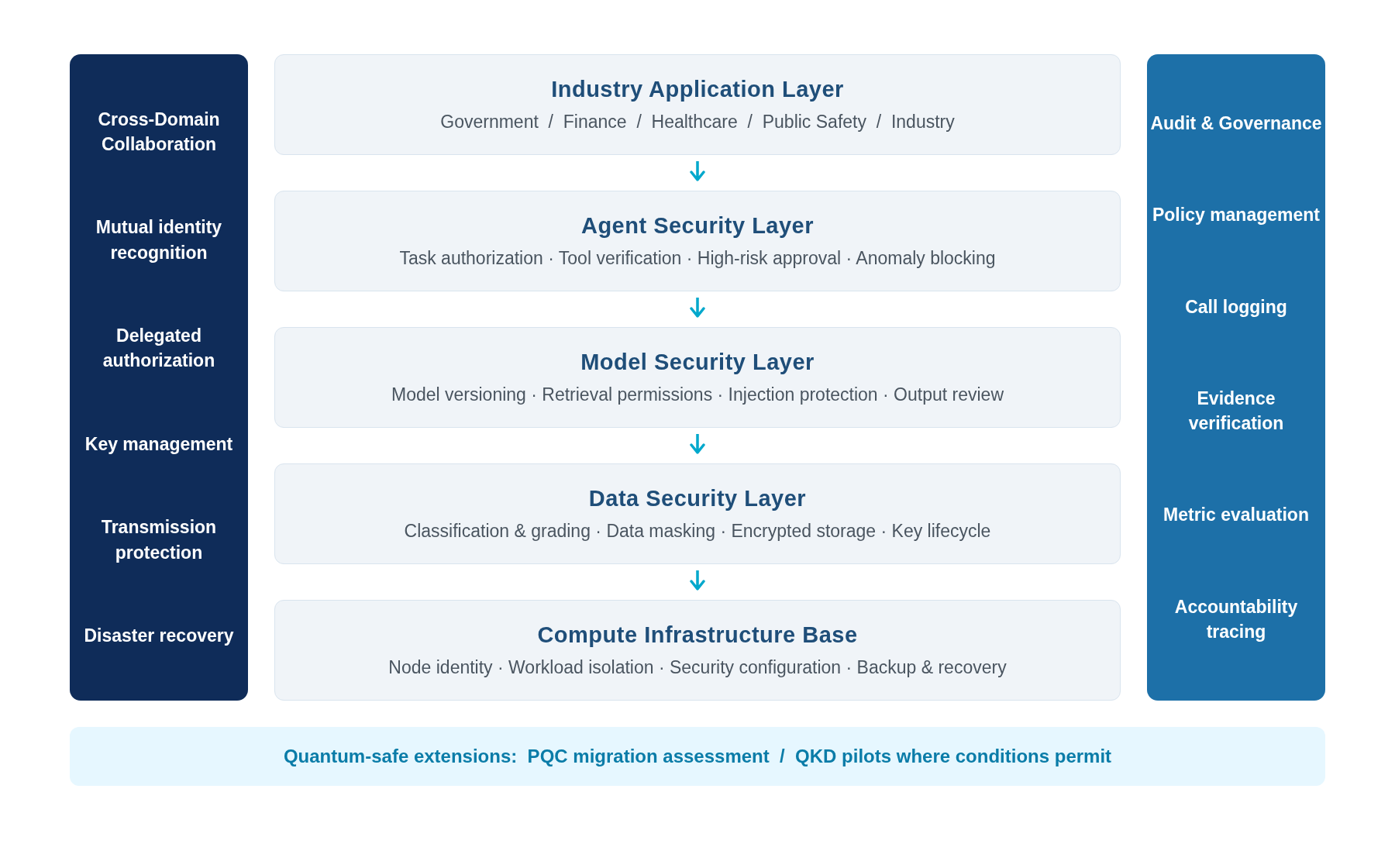
[Figure 2 Security AI Full-Stack Reference Architecture]
Connections in the architecture represent security dependencies and governance relationships; they do not mean that every business request must pass through every component in a fixed sequence. Each layer should exchange identities, authorization scope, task identifiers, and audit events through clearly defined interfaces, avoiding inconsistent security semantics between upstream and downstream systems.
The items shown in the figure are reference design capabilities. The components, implementation methods, cryptographic algorithms, and service boundaries adopted by a project should be recorded in the deployment inventory.
2.2 Full-Stack Components and Control Responsibilities
Security capabilities should integrate with the computing, scheduling, model-access, and industry-agent systems described in the main white paper. The control placements shown in the table below do not mean that every product has implemented these functions in every version.
| Component | Recommended Security Controls | Key Interfaces or Records |
|---|---|---|
| Xingchen Intelligent Computing Center | Physical and runtime-environment protection, network segmentation, node isolation, backup and recovery | Resource identities, node status, recovery records |
| Tianyu Intelligent Computing Platform | Scheduling identity validation, resource quotas, task-domain constraints, cross-center policy checks | Task identifiers, authorization domains, scheduling logs |
| Lingyan Miaoyu and LingYu Architecture | Model-version management, input/output controls, knowledge-retrieval authorization, task-orchestration constraints | Model versions, knowledge versions, policy results |
| ALRO Model Access | Access-credential management, routing scope, quota limits, call traceability | Caller identity, model endpoint, request summary |
| Industry Agents and Tools | Tool allowlists, parameter validation, operation approval, result verification | Tool permissions, approval ID, execution receipt |
Unified Identity and Policy
The invocation chain should preserve the relationship among the real identities of users, services, and agents. Agent names or natural-language declarations should not replace authentication. Authorization should be limited by data scope, tool actions, resources, and validity period, and should be revalidated at the actual execution endpoint. Cross-domain calls must not expand the original authorization.
Shared Audit and Evidence
A task identifier should link model calls, knowledge retrieval, tool execution, and approval events. Audit records should contain the necessary version information, timestamps, calling entities, and disposition outcomes. Sensitive content should be minimized, masked, and access-restricted in audit records. Retention periods and access responsibilities should be determined according to project requirements.
Failure and Change Control
Changes to models, tools, policies, and routing may affect security boundaries and should therefore undergo change review and regression testing. When a critical control is unavailable, the system should stop the relevant high-risk operation or enter a restricted mode; it should not maintain business continuity at the expense of security by allowing operations by default.
Core Security Technologies
3.1 Distributed Data Protection
A distributed data environment should protect the full lifecycle of storage, transmission, retrieval, and use, on the basis of data classification and authorization. Each node retains responsibility for data management within its own domain and collaborates through unified policies and auditable interfaces. “Data remaining within the domain” should be defined as a verifiable data-flow constraint.
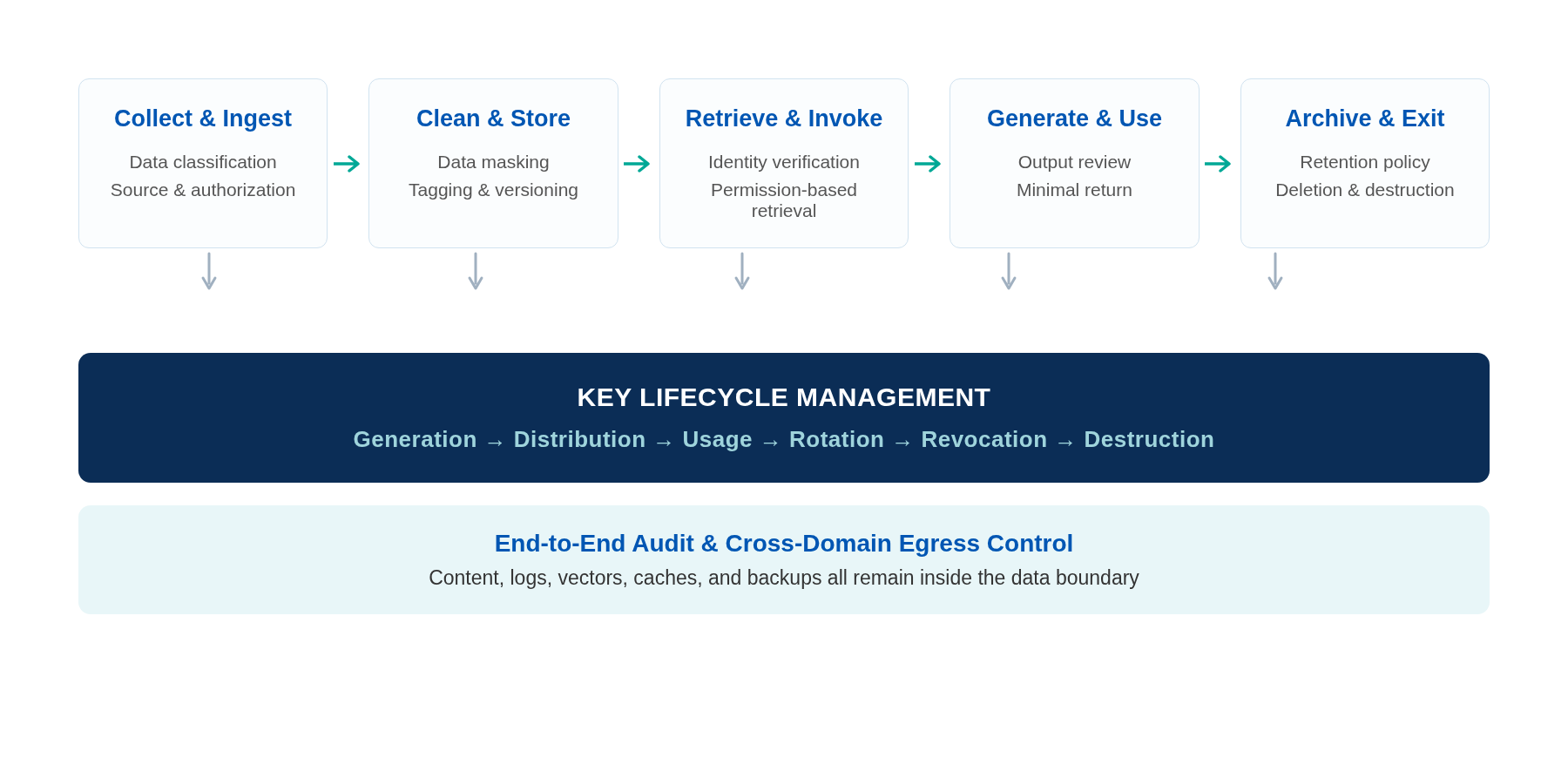
[Figure 3 Data Lifecycle and Key Management]
Key management should cover generation, distribution, use, rotation, revocation, and destruction, with clear separation of access to keys and data, backup and recovery procedures, and responsible parties. Algorithm names, parameters, certificates, cryptographic modules, and protocol implementations should be included in the asset inventory and support subsequent migration and replacement.
Derived Data and Egress Checks
Vectors, summaries, model outputs, and logs may still contain sensitive information and should be evaluated together with the original data. Egress checks should decide whether to allow, mask, or block data based on data category, recipient, purpose, and authorization scope. Derived data should not be treated as public information by default.
During deployment, data residency, access paths, and backup paths should be verified. Encryption or local inference alone does not satisfy all data-protection requirements.
3.2 Model Security and Controlled Agent Execution
Model security should cover provenance and versioning, knowledge retrieval, input processing, output inspection, and connections to external tools. User input, external documents, and tool-returned content should be treated as data to be processed and must not be directly elevated to system instructions. Prompt-injection defenses require permission isolation and execution-side validation.[4][5]
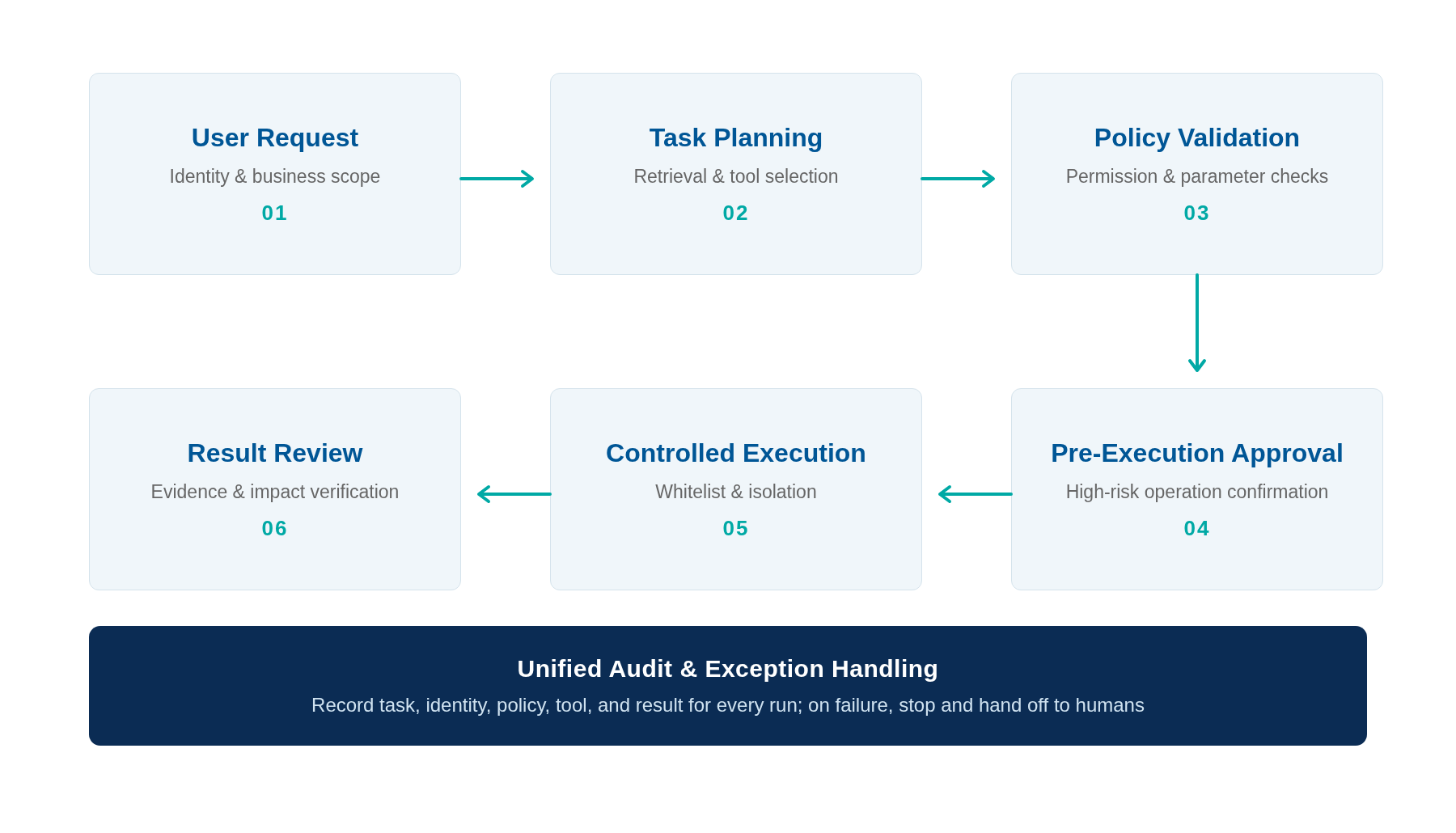
[Figure 4 Controlled Agent Execution and Audit Flow]
The model is responsible for understanding the task and proposing a plan, while an independent policy component validates invocation scope, permissions, and parameters. High-risk actions should receive explicit approval before execution. Tools should hold only the minimum permissions needed for the current task, with limits on the networks, files, and business objects they may access.
Output review should, according to the scenario, examine factual support, sensitive information, and business impact. If tool execution fails, permissions change, or results are abnormal, subsequent actions should stop, necessary evidence should be retained, and the case should be transferred for human handling. For operations that may need to be reversed, a rollback method should be defined before production launch.
Least privilege, human approval, and external policy validation follow OWASP guidance for agent security.[4] These controls must not be replaced by the model’s own judgment.
3.3 Quantum-Security Technology Paths and Boundaries
“Quantum security” should be grounded in a clearly defined threat model, cryptographic mechanisms, and implementation evidence. This special chapter distinguishes post-quantum cryptography, quantum key distribution, and quantum-assisted computing to avoid conflating research on computing capability, key-generation technologies, and system-security outcomes.
| Technology Path | Problem Addressed | Implementation Boundary |
|---|---|---|
| Post-Quantum Cryptography (PQC) | Cryptographic algorithms designed for quantum threats and implemented on classical computing devices, used for key establishment or digital signatures | Select algorithms and parameters according to applicable requirements; test protocol compatibility, performance, and implementation security |
| Quantum Key Distribution (QKD) | Uses quantum communication mechanisms to generate and distribute keys | Requires dedicated equipment, links, and authentication mechanisms; does not replace endpoint, application, or authorization protection |
| Quantum Random Number Generation (QRNG) | A technical approach for providing random-number sources to cryptographic systems | The entropy source, estimation method, and health checks must be specified; security cannot be proven by a single entropy value alone |
| Quantum-Assisted Computing | Explores specific solving tasks that combine quantum and classical computing | Performance, accuracy, and security effects should be validated separately; it does not automatically provide resistance to quantum attacks |
Post-Quantum Cryptography Migration
NIST has published standards for ML-KEM, ML-DSA, and SLH-DSA, for key encapsulation and digital signatures respectively.[3] They may serve as references for technical research, but this does not mean that a project has adopted these algorithms, nor do they replace cryptographic requirements applicable in the project’s jurisdiction or industry. Migration should begin with an inventory of existing algorithms, protocols, and long-term sensitive data, followed by selection, interoperability testing, and controlled transition.
Quantum Communication and Research Directions
QKD should be evaluated as a specialized technical path where suitable links and equipment are available, while authentication, key storage, and endpoint systems must also be protected.[6] Open quantum systems, non-Hermitian dissipative control, quantum-enhanced solving, and quantum sensing may remain research directions, but their engineering value should be confirmed through independent prototypes, controlled experiments, and security analysis.
Quantum resistance in cryptography does not imply correctness of model inference. Terms such as “quantum-grade encryption” and “quantum-enhanced inference” must not be used as substitutes for algorithms, protocols, defined boundaries, and test reports.
3.4 Cross-Domain Collaboration and Secure Disaster Recovery
Cross-domain collaboration should first define which tasks, data, and results may be shared, and then establish identity federation, authorization propagation, and transmission protection. The scheduling system is responsible for selecting execution nodes that satisfy data-domain and security policies; resource constraints must not automatically override geographic, organizational, or data boundaries.
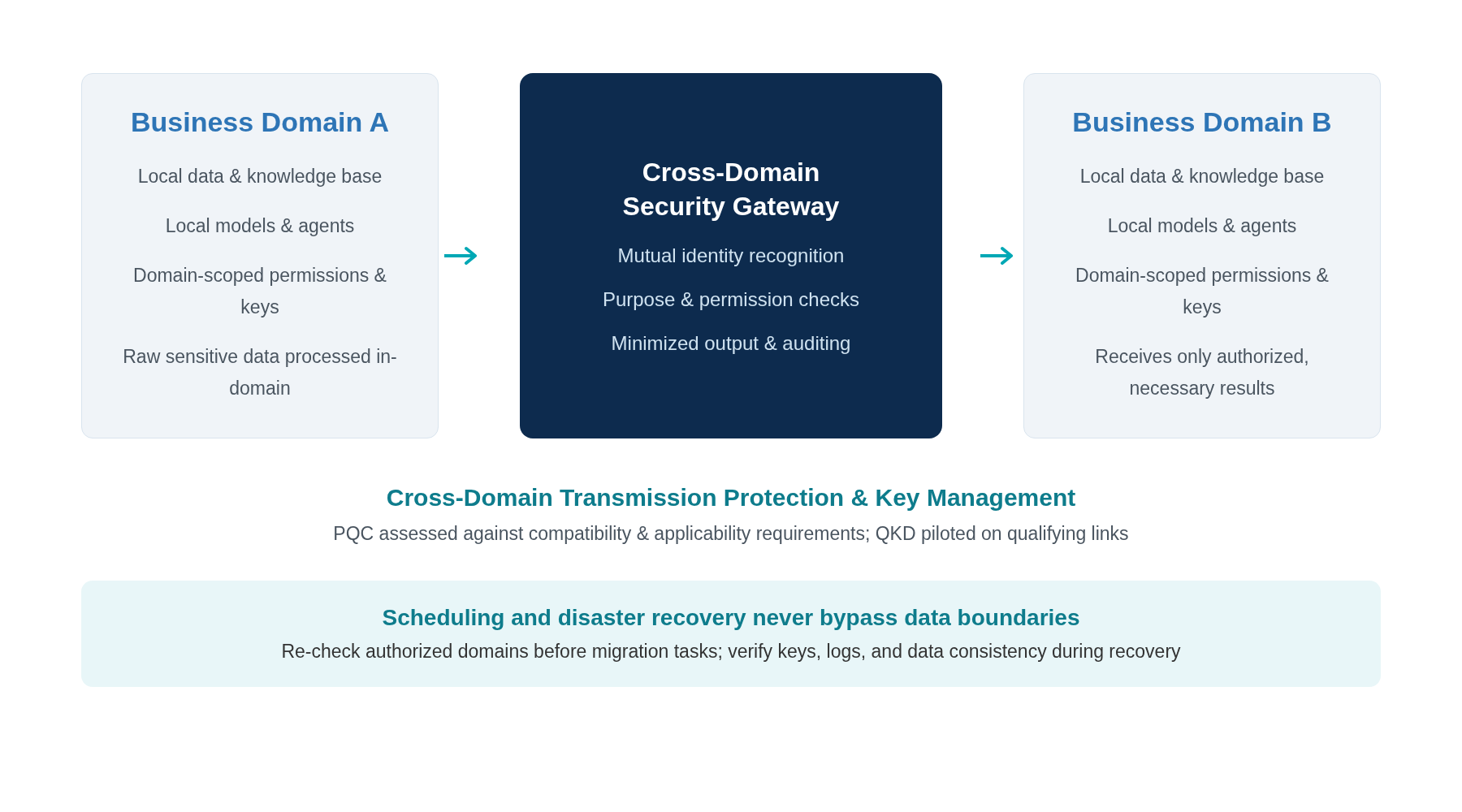
[Figure 5 Cross-Domain Secure Collaboration and Trust Boundaries]
Each domain should independently maintain its own authorizations and keys. The cross-domain gateway checks the purpose of the request, the receiving entity, and the output content, and uses a unified task identifier to correlate records on both sides. Unauthorized raw sensitive data must not leave its domain as a result of task forwarding, log aggregation, or disaster-recovery replication.
Disaster-recovery objectives should separately define the Recovery Time Objective (RTO) and Recovery Point Objective (RPO). Exercises should verify not only whether nodes fail over, but also whether business services are restored, authorization remains valid, keys are available, and data and audit trails remain consistent. Inter-center network conditions must be included in testing.
Cryptographic protection, network latency, and business recovery are different metrics. The latency of a single link switchover must not be treated as the recovery time of the entire application system.
Industry Application Scenarios
4.1 Overview of Five Industry Application Scenarios
Industry applications are built on shared security capabilities while retaining the responsibility boundaries of different business contexts. The following scenarios illustrate security design and task workflows; they do not indicate that all customer cases, deployment scales, or measured benefits already exist. Deployment should focus on specific business cases in which data can be clearly bounded, operations can be controlled, and results can be accepted against defined criteria.
[Figure 6 Five Industry Security AI Application Scenarios]
The main reusable elements across industries are identity, authorization, audit, and recovery mechanisms. Unvalidated industry decision rules should not be directly reused. Government scenarios emphasize process and authorization accountability; financial scenarios emphasize transaction and risk review; healthcare emphasizes patient information and professional judgment; public safety emphasizes incident verification; and industrial scenarios emphasize production-control boundaries.
4.2 Government and Financial Scenarios
Government Scenarios
For policy Q&A, government services, urban governance, integrated law enforcement, and emergency management, agents may assist with retrieval, document preparation, and task assignment. Content involving administrative actions or external publication should undergo business review. Cross-department collaboration should retain sources, authorization grounds, processing status, and responsible personnel.
| Capability Area | Government Scenario Control Requirements |
|---|---|
| Data | Departmental data is classified and authorized by purpose; sensitive content, retrieval indexes, and backups are subject to residency and access controls |
| Model | Policy knowledge bases manage versions and validity periods; answers cite sources and are escalated to human review when confirmation is not possible |
| Agent | Approval flows are aligned with actual permissions; law enforcement, public release, and bulk export require approval |
| Computing and Collaboration | Cross-department calls validate identity and scope; recovery exercises cover task state and data consistency |
| Evaluation and Audit | Define checks according to specific business requirements and retain approval, invocation, and handling evidence |
Financial Scenarios
For risk-control assistance, transaction auditing, asset information analysis, and review of marketing materials, customer data should be isolated from transaction permissions, and the boundary between model-assisted analysis and final decision-making should be clear. Models must not independently approve transactions, adjust credit limits, or make representations regarding returns to external parties.
| Capability Dimension | Financial Scenario Control Requirements |
|---|---|
| Data and Model | Minimize use of customer and transaction data; record model, data, and rule versions; review evidence sources |
| Agent | Separate query and transaction permissions; high-risk calls require independent approval, limits, and anomaly blocking |
| Collaboration and Audit | Cross-institution sharing validates purpose and authorization; retain decision inputs, approval records, and execution receipts |
The above are requirements for scenario implementation and do not indicate that industry certification has been obtained. Applicable requirements should be jointly confirmed by the project’s business, security, and compliance owners.
4.3 Healthcare, Public Safety, and Industrial Scenarios
Healthcare Scenarios
Clinical decision support, medication-risk alerts, medical-record structuring, and regional healthcare collaboration should be based on protection of patient information and review by healthcare professionals. The system should retain source provenance and the evidentiary basis for its outputs, clearly flag uncertain results, and must not replace diagnosis, prescriptions, or treatment decisions with model-generated content.
Public Safety Scenarios
Video analysis, patrol assistance, risk identification, and emergency dispatch should be limited by defined monitoring purposes, access scope, and retention periods. Recognition results should be treated as leads requiring verification through human review and other evidence. A model must not independently make disposition decisions that affect individual rights.
Industrial Scenarios
Equipment inspection, production forecasting, energy optimization, and cross-factory collaboration should distinguish recommendation generation from on-site control. Initial deployment may use read-only access. Execution capabilities should be opened only under explicit permissions after risk assessment, simulation, or controlled testing. Production-control operations should retain human approval and safe rollback.
| Dimension | Healthcare | Public Safety | Industrial |
|---|---|---|---|
| Data | Protection of medical records and patient identity; cross-institution authorization | Restricted access to video and event data | In-domain management of equipment and production data |
| Model | Source attribution and uncertainty disclosure | Validation of false positives and false negatives; lead verification | Scenario adaptation and abnormal-condition validation |
| Agent | Review by healthcare professionals; approval for sensitive operations | Task classification; human confirmation of disposition | Read-only first; approval for control instructions |
| Computing | In-hospital or authorized nodes; backup and recovery | Emergency load handling and permission continuity | Edge isolation; degraded operation during network loss |
| Audit | Patient-access and professional-review records | Query, identification, and disposition records | Parameter changes, instructions, and rollback records |
Evaluation Metrics and Validation Methods
5.1 Metric Definitions and Measurement Design
Security evaluation should measure control coverage, detection performance, business impact, and operational stability at the same time. Each metric should clearly define the evaluated object, denominator, dataset, runtime environment, and statistical window, avoiding the conflation of coverage, accuracy, success rate, and system availability.
| Metric | Recommended Calculation | Conditions That Must Be Stated |
|---|---|---|
| Control Coverage Rate | Number of objects for which controls are implemented and validated as effective ÷ total number of objects that should be covered | Asset inventory, applicable rules, and exclusions |
| Risk Blocking Rate | Number of risky requests correctly blocked ÷ total number of risky requests | Attack category, sample source, bypass samples |
| False Blocking Rate for Normal Requests | Number of normal requests incorrectly blocked ÷ total number of normal requests | Real business distribution, impact of staged rollout |
| Detection Precision and Recall | Precision = TP÷(TP+FP); Recall = TP÷(TP+FN) | Labeling rules, sample size, and class distribution |
| Task-Chain Audit Coverage Rate | Number of tasks with complete audit fields ÷ total number of tasks that should be audited | Required fields, failed tasks, and sampling method |
| Latency and Recovery Metrics | Report P50, P95, and P99; calculate RTO and RPO separately | Measurement start and end points, load, region, and failure type |
| Service Success Rate | Number of requests meeting predefined success criteria ÷ total number of valid requests | Classification of timeouts, rejections, retries, and failures |
TP: risk samples correctly identified; FP: normal samples incorrectly classified as risky; FN: risk samples missed by detection.
Cryptography and Data-Protection Evaluation
Cryptographic capabilities should be verified through inventories of algorithms and parameters, protocol configuration, implementation, and key-management checks; they should not be measured by model accuracy. Data residency should be verified against actual traffic, logs, caches, operations, and backup paths. De-identification effectiveness should be assessed together with re-identification risk.
All results should be associated with the versions of the model, prompt templates, knowledge base, tools, policies, and test environment. Reports should disclose failure cases and residual risks as well as successful results, rather than presenting only the best outcomes.
5.2 Testing Process and Evidence Management
Evaluation should proceed through scope definition, sample preparation, test execution, issue remediation, and retesting. Business, platform, and security teams should jointly confirm the pass criteria. Functions that do not meet the criteria should remain disabled or be limited to pilot scope.
| Test Category | Coverage | Evidence to Retain |
|---|---|---|
| Data and Privacy | Unauthorized retrieval, cross-domain export, log leakage, cache and backup access | Authorization matrix, de-identified samples, data flows, and access logs |
| Model and Retrieval | Prompt injection, knowledge poisoning, missing citations, sensitive-information output | Sample set, responses, retrieval records, version information |
| Agents and Tools | Unauthorized calls, parameter tampering, approval bypass, abnormal task chains | Policy decisions, approval status, tool-execution receipts |
| Cross-Domain and Cryptography | Identity-federation failure, key revocation, protocol compatibility, cross-domain task restrictions | Configuration inventory, handshake or validation records, failure logs |
| Availability and Recovery | Node failure, network interruption, audit failure, backup recovery | Failure timeline, RTO/RPO, data-validation records |
Reporting Requirements for High-Confidence Metrics
Metrics such as 99.999% require a sufficient observation scale and clearly defined statistical methodology. The absence of failures in a small number of tests does not directly demonstrate the same performance in production. Reports should state the sample size, number of failures, test duration, load distribution, and estimation uncertainty, and should distinguish request success rate from time-based availability.
Evidence Package and Retest Triggers
The evidence package should include at least the test plan, environment inventory, input samples, expected outcomes, actual results, issue records, and retest conclusions. Access controls should be applied to sensitive samples and logs to prevent evaluation materials from becoming a new leakage channel.
When substantial changes occur to the model, knowledge base, tool permissions, routing policies, cryptographic configuration, or runtime environment, the affected controls should be reassessed. Audit findings, actual incidents, and new attack methods should also trigger updates to the test set and control policies.
Implementation Roadmap and Operational Governance
6.1 Phased Implementation Roadmap
Security capabilities should be developed progressively within a controlled scope, with each phase’s outputs mapped to verifiable acceptance criteria. The implementation period depends on system complexity, data sensitivity, the existing security baseline, and business risk; no uniform schedule should be set independently of project conditions.
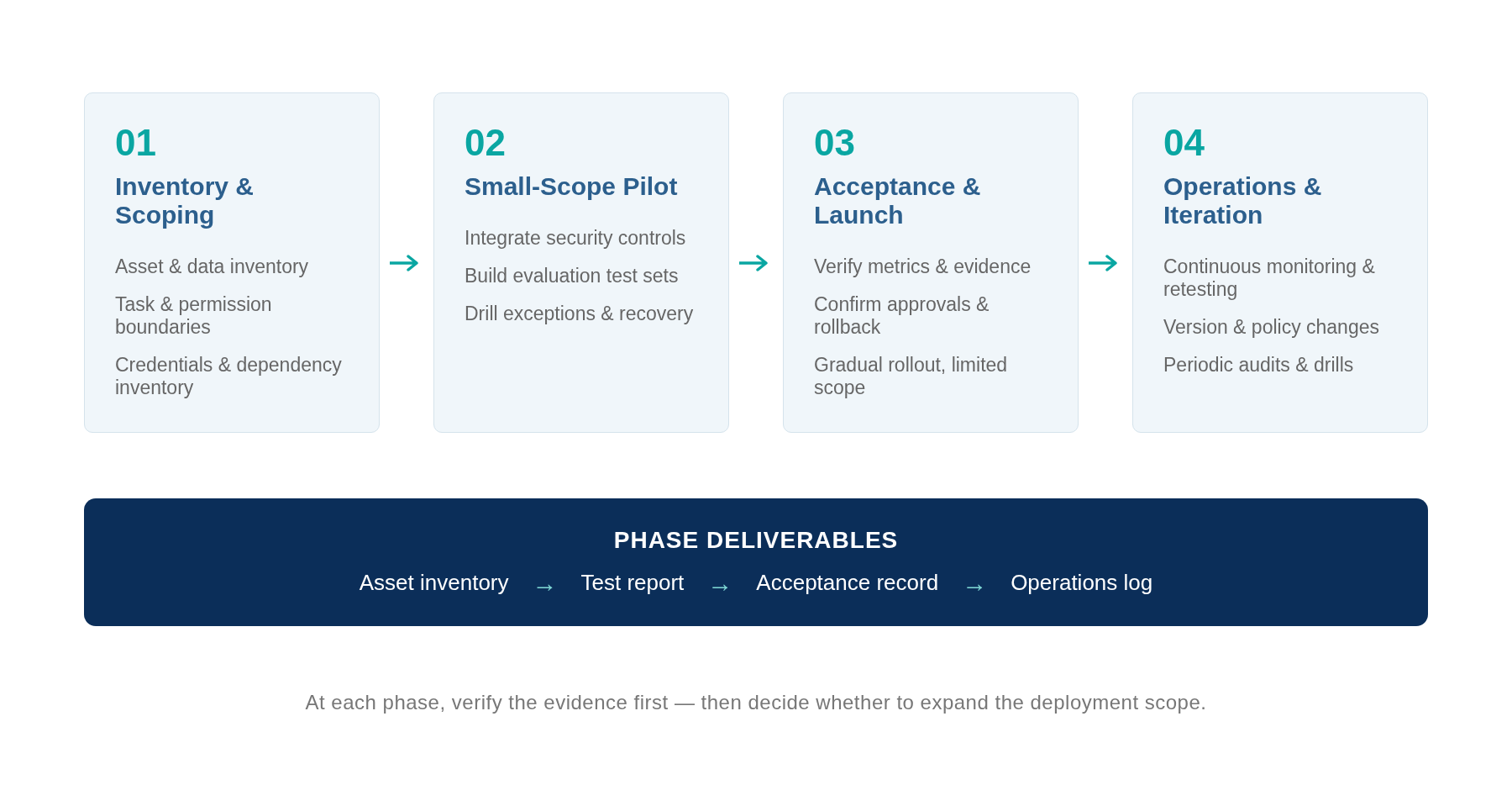
[Figure 7 Phased Security AI Implementation Roadmap]
| Phase | Condition for Entering the Next Phase |
|---|---|
| Inventory and Boundary Definition | Clarify data flows, risk scenarios, assets, and responsibilities; establish initial control and cryptography inventories |
| Limited Pilot | Core controls operate; test and exercise results are reproducible; remediation plans exist for key issues |
| Acceptance and Launch | Pass agreed tests; approval, audit, rollback, and operations responsibilities are in place |
| Operations and Iteration | Continuously record metrics, incidents, and changes; conduct regular retesting and review residual risk |
6.2 Operational Responsibilities and Delivery Requirements
Sustained security depends on clear responsibilities and executable operational processes. Every launch and change should confirm who defines business rules, who approves risky operations, who maintains technical controls, who retains evidence, and who has authority to suspend the service.
| Responsible Role | Primary Responsibilities | Key Deliverables |
|---|---|---|
| Business Owner | Define permitted tasks and business risks; confirm human-review points | Task inventory, approval rules, business-acceptance records |
| Data Owner | Determine data classification, usage authorization, and sharing scope | Data catalog, flow diagrams, sharing and retention rules |
| Platform and Operations Team | Implement identity, isolation, logging, backup, and change management | Deployment inventory, configuration baseline, recovery-exercise report |
| Model and Application Team | Manage model and knowledge versions; maintain evaluation and rollback | Model cards, test records, version and tool inventory |
| Security and Compliance Team | Review controls and evidence; track issues and exceptions | Evaluation report, risk register, exception approvals |
| Audit and Incident Response Personnel | Review execution records; coordinate response and post-incident review | Audit report, incident timeline, remediation and retest conclusions |
Mandatory Checklist for Release and Acceptance
Project delivery should include architecture and data-flow diagrams, an inventory of actual functions, permission and approval matrices, cryptography and key-management plans, test and disaster-recovery reports, log-retention rules, incident-response procedures, and a residual-risk register. Quantum-related functions should additionally include algorithm or device versions, applicable links, and dedicated validation materials.
Exception Handling and Continuous Improvement
When unauthorized access, abnormal export, tool misuse, or key incidents are detected, the relevant operations should be stopped according to risk, affected components isolated, necessary credentials revoked, and evidence preserved. Before recovery, confirm that the issue has been addressed and critical controls are effective. Post-incident review should be translated into updates to policies, test sets, and operational processes.
The value of Lingyan Miaoyu Security AI lies in keeping capability boundaries, execution processes, and validation evidence aligned. Product capabilities, business scenarios, and organizational responsibilities together form the foundation for trustworthy operation; no single technology can replace this system.
Appendix A Metric Validation Checklist
The numerical values from the original metric tables in this special chapter are retained below as inputs pending verification. They are not achieved product performance, committed targets, or acceptance conclusions. A project should first revise the metric definitions and determine applicability, then agree on targets and conduct testing. Metrics that are not applicable must not be repurposed directly as evidence of other capabilities.
A.1 Data and Key Metrics
| Original Metric Category | Original Threshold — Pending Verification |
|---|---|
| Quantum Encryption Strength | Quantum key length (≥256 bit), quantum random-number entropy value (≥0.98), quantum key update frequency (millisecond level). |
| Cross-Domain Quantum Collaboration Capability | Cross-domain quantum key collaboration success rate (≥99.999%), cross-domain data quantum-encapsulation integrity rate (≥99.999%). |
| Data-Within-Domain Capability | Sensitive-data in-domain residency rate (100%), cross-domain data de-identification rate (≥99.99%). |
| Quantum-Secure Disaster-Recovery Capability | Multi-center quantum-secure disaster-recovery switchover latency (≤30 ms), disaster-recovery success rate (≥99.999%). |
A.2 Model Security Metrics
| Original Metric Category | Original Threshold — Pending Verification |
|---|---|
| Quantum-Enhanced Inference Stability | Inference-path quantum-security validation success rate (≥99.999%), inference-path disturbance-detection sensitivity (≥95%). |
| Semantic Boundary Control Capability | Semantic out-of-bounds detection accuracy (≥98%), semantic-violation blocking rate (≥99.5%). |
| Model Call-Chain Audit Capability | Call-chain audit coverage rate (100%), chain-integrity validation success rate (≥99.999%). |
| Cross-Domain Model Collaboration Security | Cross-domain model-collaboration security validation success rate (≥99.999%). |
Validation focus: Key length alone cannot represent post-quantum security strength. Entropy values should specify the entropy type, unit, and estimation method. “Quantum validation” and “disturbance sensitivity” must define the specific mechanism and decision criteria. Data residency, de-identification, and audit coverage rates should define the complete population of objects.
A.3 Agent and Computing Metrics
Agent Security
| Original Metric Category | Original Threshold — Pending Verification |
|---|---|
| Permission-Tier Management Capability | Permission-boundary identification accuracy (≥99%), unauthorized-call blocking rate (≥99.9%). |
| Task-Chain Audit Capability | Task-chain audit coverage rate (100%), chain-anomaly identification rate (≥97%). |
| Behavioral Consistency Validation Capability | Agent-behavior consistency validation accuracy (≥98%), quantum-enhanced abnormal-behavior identification rate (≥95%). |
| Tool-Call Security | Tool-call security validation success rate (≥99.999%), tool-call risk blocking rate (≥99.5%). |
Computing and Cross-Domain Collaboration
| Original Metric Category | Original Threshold — Pending Verification |
|---|---|
| Cross-Domain Quantum-Secure Scheduling Capability | Scheduling success rate (≥99.999%), cross-domain scheduling latency (≤50 ms). |
| Quantum-Secure Disaster-Recovery Capability | Disaster-recovery switchover latency (≤30 ms), disaster-recovery success rate (≥99.999%). |
| Intelligent Computing Center Quantum Collaboration Capability | Multi-center quantum collaboration success rate (≥99.999%), cross-center task-chain integrity rate (≥99.999%). |
| Inference-Node Security | Inference-node quantum-security validation success rate (≥99.999%). |
All percentage thresholds should be accompanied by the total sample size, failure count, statistical period, and applicable scenarios. Detection and blocking metrics should also report false positives for normal business activity. Millisecond-level latency metrics should define measurement start and end points, network distance, concurrent load, and percentile. Single-component test results must not be directly generalized to end-to-end business performance.
This page and the previous page are both checklists pending verification and do not indicate that Huazhi Future has implemented all quantum-related mechanisms listed in the tables or achieved the stated values.
A.4 Industry Metrics and Validation Records
| Industry | Original Threshold — Pending Verification |
|---|---|
| Government | Government-data security compliance coverage rate (100%), agent-behavior audit coverage rate (100%). |
| Financial Services | Financial-data security compliance coverage rate (100%), risk-control chain quantum-security validation success rate (≥99.999%). |
| Healthcare | Healthcare-data security compliance coverage rate (100%), diagnostic-chain quantum-security validation success rate (≥99.999%). |
| Public Safety | Video-stream quantum-secure encryption coverage rate (100%), risk-identification chain integrity validation rate (≥99.999%). |
| Industrial | Industrial-equipment data quantum-secure encryption coverage rate (100%), production-chain quantum-security validation success rate (≥99.999%). |
A “100% compliance coverage rate” should correspond to a clear, applicable, and complete checklist, with item-by-item validation evidence. It is not equivalent to obtaining certification or to comprehensive compliance across all business activities. A “quantum-security validation success rate” should first define the validation object and mechanism; it must not be used as a substitute metric for diagnostic accuracy, risk-judgment accuracy, or production safety.
Recommended Validation Record Fields
| Field Group | Record Content |
|---|---|
| Metric Definition | Name, purpose, object, calculation formula, denominator, exclusions |
| Test Conditions | Model and tool versions, cryptographic mechanisms, hardware, network, load, dataset |
| Results and Evidence | Target value, measured value, sample size, failure count, time window, evidence location |
| Review and Handling | Responsible person, review conclusion, defects and risks, remediation plan, retest date |
Validation Status
Recommended status values are “To Be Defined,” “To Be Tested,” “Tested,” “Reviewed,” and “Continuously Monitored.” Only results that have been reviewed and have a clearly defined scope of applicability may be included in external technical specifications or project acceptance documents. Validity should be reconfirmed after changes to the environment or version.
Appendix B Terms and References
| Term | Meaning in This Special Chapter |
|---|---|
| PQC | Post-quantum cryptography: cryptographic algorithms and related migration technologies designed for threats from quantum computing |
| QKD | Quantum key distribution: technology that uses quantum communication mechanisms to generate and distribute keys |
| QRNG | Quantum random number generation: a technical approach for obtaining random numbers from quantum processes |
| Least Privilege | Grant only the permissions, resource scope, and validity period required to complete a specific task |
| Prompt Injection | An attack in which input or external content attempts to alter the model’s established task and instruction boundaries |
| RTO / RPO | Recovery Time Objective / Recovery Point Objective, respectively constraining recovery duration and the acceptable range of data loss |
| Data Remaining Within the Domain | Restricting the flow of data and sensitive derived information under clearly defined data domains, processing flows, and authorization rules |
References
[1] Huazhi Future. Lingyan Miaoyu Special Chapter on Security AI Capabilities. Source material for this special chapter.
[2] Huazhi Future. Huazhi Future Lingyan Miaoyu Large Language Model Application White Paper. Reference for the system and content.
[3] NIST. NIST Releases First 3 Finalized Post-Quantum Encryption Standards, 2024. https://www.nist.gov/news-events/news/2024/08/nist-releases-first-3-finalized-post-quantum-encryption-standards
[4] OWASP. AI Agent Security Cheat Sheet. https://cheatsheetseries.owasp.org/cheatsheets/AI_Agent_Security_Cheat_Sheet.html
[5] OWASP. LLM Prompt Injection Prevention Cheat Sheet. https://cheatsheetseries.owasp.org/cheatsheets/LLM_Prompt_Injection_Prevention_Cheat_Sheet.html
[6] NCSC. Quantum networking technologies. https://www.ncsc.gov.uk/paper/quantum-networking-technologies
External materials are used as references for technical definitions and design principles and do not constitute certification or testing endorsement of Huazhi products.
FAQ: Lingyan Miaoyu Security AI White Paper
What is the Lingyan Miaoyu Security AI special chapter?
It is a special chapter on security AI capabilities released by Huazhi Future (Chongqing) Technology Co., Ltd. as a companion to the Lingyan Miaoyu Large Language Model Application White Paper. It explains how data protection, model security, agent governance, computing-resource coordination, and evaluation and audit work together, providing a unified framework for technical selection, solution design, project acceptance, and ongoing operations.
What are the four security boundaries enterprises should define?
According to the chapter: the data boundary (encryption alone does not mean data stays in-domain — inputs, outputs, vector indices, logs, caches, and backups must also be managed); the execution boundary (a model may propose a plan but must not grant itself permissions — high-risk operations require independent authorization and business approval); the result boundary (signatures and hashes detect tampering but cannot prove a model conclusion is correct — professional judgments need human review); and the security assurance boundary (cryptographic protection, system security, and industry compliance are separate layers that cannot be inferred from one another).
How does the chapter distinguish PQC, QKD, and QRNG?
Post-Quantum Cryptography (PQC) refers to cryptographic algorithms designed for quantum threats and implemented on classical devices, used for key establishment or digital signatures. Quantum Key Distribution (QKD) uses quantum communication mechanisms to generate and distribute keys, and requires dedicated equipment and links without replacing endpoint, application, or authorization protection. Quantum Random Number Generation (QRNG) provides random-number sources to cryptographic systems, with its entropy source and estimation method requiring explicit specification. Quantum-assisted computing is assessed separately and does not automatically provide resistance to quantum attacks.
Which industry scenarios does the chapter cover, and what does each emphasize?
Five scenarios: government (process and authorization accountability for policy Q&A, urban governance, and law enforcement assistance), financial (separating customer data from transaction permissions; models must not independently approve transactions or adjust credit limits), healthcare (patient information protection and professional review; models must not replace diagnosis or prescriptions), public safety (recognition results treated as leads requiring human verification), and industrial (read-only access first, with production-control operations requiring human approval and safe rollback).
How should the metric thresholds in Appendix A be interpreted?
All numerical thresholds in Appendix A — such as ≥99.999% success rates or ≤30 ms recovery switchover latency — are retained as inputs pending verification. They are not achieved product performance, committed targets, or acceptance conclusions. Projects should first revise metric definitions, determine applicability, agree on targets, and conduct testing with disclosed sample sizes, failure counts, and statistical methods.
Related Reading
External materials cited in this chapter are used as references for technical definitions and design principles and do not constitute certification or testing endorsement of Huazhi Future products.
Huazhi Future (Chongqing) Technology Co., Ltd.
Security Architecture · Agent Governance · Industry Applications · Validation & Evaluation